The SwitchBot Onero H1 has been one of the most talked‑about smart home robots since its big reveal at a major tech show earlier this year. Unlike many single‑purpose devices on the market, this robot aims to go beyond simple chores and provide a versatile, AI‑driven helper that can adapt to a range of home tasks. The buzz around this robot has grown enough that many see it as a milestone in making robotic assistance more than just a gadget or concept.
With smart home tech becoming ever more capable and competitors starting to emerge, the Onero H1 stands out for its ambition and real-world potential. This review breaks down what it can do, how it performs so far, where it still struggles, and whether it lives up to the promise of being a true home companion.
Design And Build
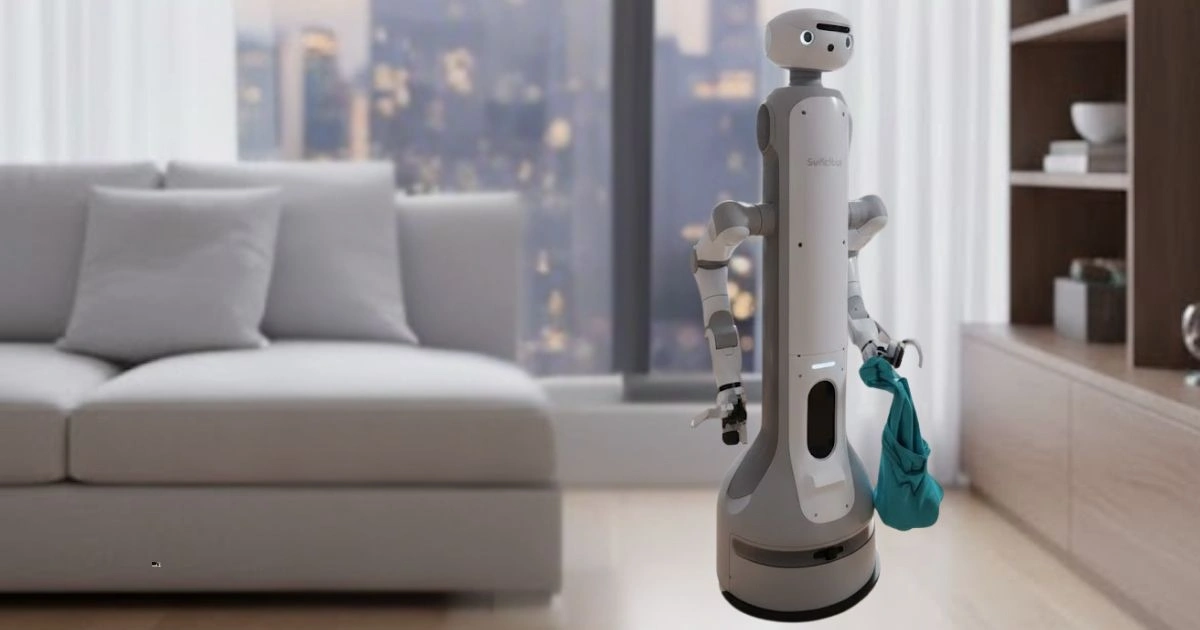
One look at the Onero H1 makes it clear this isn’t a simple robotic vacuum or single‑function device. The robot combines a humanoid upper body with a wheeled base, giving it a distinctive presence in the home. While it does not have legs, the robot includes two articulated arms with high degrees of freedom that allow for detailed movement and manipulation of various objects.
It measures around 1.3 meters tall, which makes it tall enough to interact with everyday home objects such as countertops, washing machines, and shelves. This size is similar to other consumer‑oriented robots designed to work alongside humans, and it strikes a good balance between reach and stability. The wheeled base keeps it grounded and helps reduce mechanical complexity compared with bipedal robots that walk.
Overall, the build feels solid and intentional. It does not try to mimic perfect humanoid movement, instead choosing parts and motions that serve practical purposes first. The articulated arms, multi‑fingered hands, and 360° cameras give it the potential to handle a range of tasks other bots simply can’t touch yet.
View this post on Instagram
AI And Perception
At its center, the Onero H1 features SwitchBot’s advanced OmniSense VLA system. This on‑device AI model combines vision, depth perception, and tactile feedback to help the robot understand its environment in a meaningful way. Rather than relying solely on scripted movement patterns, this system aims to give the robot a sense of how to grasp, push, open, and organize objects more like a human would.
Visual sensors and depth cameras spread across the Onero’s head, torso, and arms allow it to build a map of its surroundings in real time. This means it doesn’t just see objects as blobs; it can begin to understand shape, position, and even how best to interact with items. That kind of perception is critical if a household robot is expected to go beyond vacuuming floors or simple navigation.
While the AI is promising, it’s worth noting that early demonstrations show the robot still has a learning curve. Tasks like loading laundry or opening a washer door take much longer than a human would take. Though this is understandable for a first‑generation consumer robot, it highlights that the Onero is still in its early stages of practical performance.
Practical Task Performance
Laundry And Cleaning
SwitchBot’s demos have shown the Onero lifting clothes, placing them in a washing machine, and even closing the lid. This type of chore is exactly the kind of thing proponents of home robotics say will define the next wave of smart devices. However, real people watching these demos have noted that the robot is very slow at completing these activities, sometimes taking multiple minutes per garment. This slow pace makes sense for early builds, but it also highlights the gap between concept and convenience.
The handling of clothing and larger soft items also remains challenging for robots, and the Onero is no exception. Even with advanced sensor feedback, fabric doesn’t always respond like a rigid object, making folding and sorting chores particularly difficult. If the robot ever manages this reliably, it could be one of its most appealing capabilities. For now, though, it feels like a proof of concept more than a finished product.
Manipulating Household Items
Outside of laundry, the Onero is designed to pick up loose items, open drawers or doors, and organize small objects. Its arms and multi‑finger hands give it a theoretical advantage over simpler robots that lack such manipulators. These features make it possible to interact with everyday items like cups, scattered clothes, utensils, and more.
In demos, it has shown promise in grasping and moving objects, even navigating cluttered spaces. Real-world results will vary by home layout and item type. Still, the underlying ability to perceive and act is a big step forward compared with traditional robots that can only vacuum, mop, or clean floors.
View this post on Instagram
Integration With Smart Home Systems
Part of what makes the Onero H1 compelling is its ability to work with other SwitchBot devices and, by extension, broader smart home systems. Because the robot can communicate with hubs and other linked gadgets, it may coordinate activities that involve more than one device. For example, a smart vacuum might clean the floor while the Onero handles objects on tables or shelves. This kind of collaboration is key to fulfilling the promise of a truly smart home.
Integration with Matter and other smart standards could also play a part, though early information suggests most connectivity might still be tied closely to SwitchBot’s own ecosystem. Users with existing SwitchBot gadgets will likely find this setup easier to adopt compared with those starting from scratch.
Practical Concerns And Limitations
Speed And Efficiency
By far the biggest criticism of the Onero so far is its slow pace. Demonstrations show that it can be very methodical, but the time it takes to do simple tasks could be a deal breaker for many. The robot is not yet in a position to genuinely save time in the way people expect from home help. In some cases, a human can accomplish these chores in a fraction of the time.
This slow pacing is not surprising in early robotics. Manipulating soft or irregular items like laundry is extremely difficult for machines to handle reliably. Still, the expectation that robots can do chores quickly and efficiently is baked into how most of us think about automation. Right now, that expectation remains unmet.
Household Constraints
Because the robot uses a wheeled base without legs, it is best suited to single‑floor homes or spaces without stairs. Homes with steps, thick rugs, or uneven floors may present navigation problems that the Onero isn’t equipped to solve. It also does not yet boast full autonomy in unknown environments, meaning it may struggle outside of predictable layouts.
Safety and reliability are also unknowns at this stage. While early demos avoid hazards, real-world conditions like pets, cluttered rooms, or unexpected obstacles could present difficulties that the robot is not yet prepared for. These are common challenges in robotics, but they remain hurdles for everyday use.
Price And Availability
Exact pricing and release dates for the Onero H1 remain somewhat unclear. Some outlets have cited a price near $1,500, which would make it much more accessible than earlier ideas for consumer humanoid robots. This competitive positioning, if accurate, would place it well below ultra‑premium industrial robots while still offering real bodily autonomy.
SwitchBot’s official site also lists a much higher price of around $9,999, which suggests there may be multiple configurations or that early pricing might shift closer to launch. Until definitive information is shared by the company, both figures should be viewed with caution.
Pre‑orders are expected to open on SwitchBot’s website, but firm ship dates and regional availability details are still pending. This ambiguity is typical of early hardware announcements that debut at shows before a consumer release.
View this post on Instagram
Comparison With Other Robots
The world of home robotics is starting to take shape beyond just vacuum bots and cleaners. Companies like LG have showcased their own humanoid robots, while others focus on specialized tasks. The Onero H1 distinguishes itself by being part of a broader ecosystem rather than a standalone novelty.
That said, many of these systems remain in the demo or early production phase. None has yet proven they can consistently outperform a human in daily chores at a reasonable pace. For now, the field is still competitive and exploratory, with each robot bringing its own strengths and limitations.
Who Is The Onero H1 For?
The ideal audience for the Onero H1 is not necessarily the average homeowner expecting a robotic butler. Instead, its strengths align more with early adopters, tech enthusiasts, and people with specific needs, such as those who might benefit from automation for accessibility purposes. Robots can help reduce strain for individuals with mobility issues or difficulty handling certain tasks that are physically demanding.
For most households, however, the robot cannot yet justify its price or promise in terms of time savings. If future updates improve speed, reliability, and autonomy, the value proposition could shift significantly. For now, though, this robot serves more as a fascinating step in robotics than a must‑have appliance.
The SwitchBot Onero H1 And The Future Of Smart Homes
The SwitchBot Onero H1 represents an exciting leap toward a future where robots are more than just high‑end vacuum cleaners. Its combination of adaptive AI, humanoid design, and integration with smart home ecosystems shows what might be possible as robotics continues to evolve.
At the same time, it remains clear that this robot is an early example rather than a finished product ready to transform daily life. Tasks are slow, performance varies, and real-world conditions will test its capabilities far more than controlled demos. Despite these limitations, the Onero H1 holds promise, particularly for tech enthusiasts and people with specific automation needs.
Whether this robot heralds a true shift in home automation remains to be seen, but its launch is an important milestone in making real home robotics more accessible.