AI wearables are no longer simple fitness trackers or notification devices. New reviews, hands‑on reports, and product news show that these technologies are evolving into full‑fledged, intelligent companions that support health, productivity, communication, and everyday life in more meaningful ways. From smart rings that analyze wellness data to augmented reality glasses that provide contextual assistance, AI wearables are reshaping what it means to wear technology on the body.
This article dives deep into the most exciting AI wearable trends emerging now, highlights the latest products from global brands, offers clear comparisons, and answers key questions about where this market is headed.
Why AI Wearables Are More Than Just Gadgets
Wearables began as basic tools for tracking steps, heart rate, and sleep. Today’s devices are far more ambitious. They aim to predict user needs, offer personalized insights, integrate with broader digital ecosystems, and even detect health issues before symptoms become obvious. AI plays a central role in this shift by turning raw data into actionable guidance, not just numbers.
At major tech shows this year, like CES, the focus was on more advanced sensors, on‑device AI that reduces reliance on cloud processing, and wearables that blend seamlessly with daily life. These advancements reflect a broader trend of moving intelligence from screens to the body itself.
7 Game-Changing AI Wearable Trends To Follow Now
Trend 1: Smart Rings And Minimalist Wearables
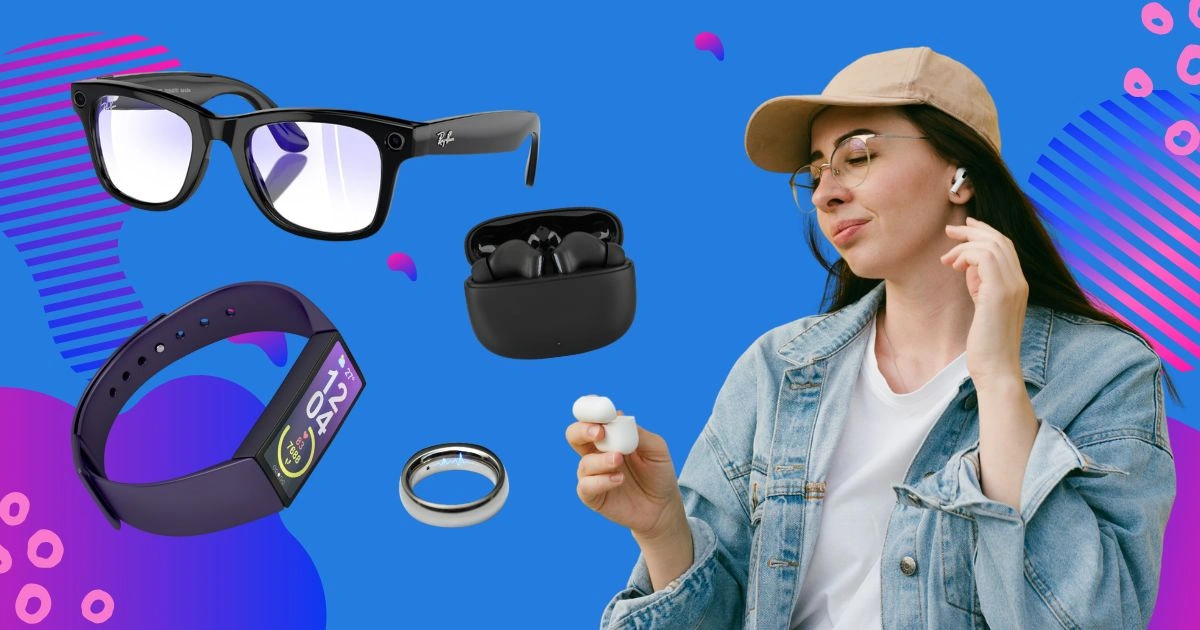
Smart rings have become a standout category in the AI wearables space. Unlike bulky wrist devices, smart rings like the Oura Ring or the aaboRing Health & Fitness Tracker Smart Ring offer discreet monitoring with long battery life and all‑day comfort. These rings track metrics including heart rate, temperature, sleep stages, stress levels, and oxygen saturation, and then use AI to offer personalized wellness insights.
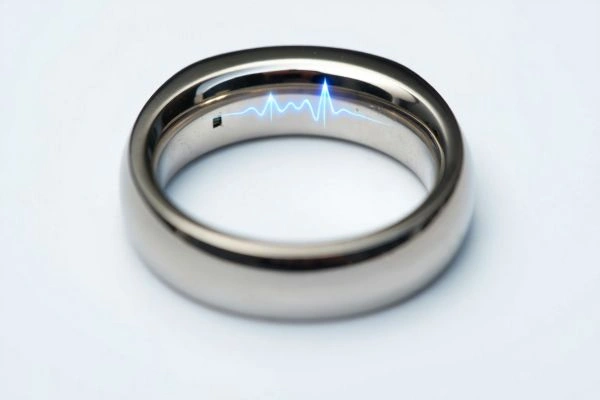
Smart rings now do more than count steps. For example:
- Health analytics: AI analyzes biometric trends to anticipate needs like hydration, recovery readiness, or sleep quality.
- Activity tracking: Rings can monitor dozens of activity types automatically.
- Seamless integration: Many work with major platforms like Apple Health and Google Fit, allowing data to flow into broader health ecosystems.
These devices appeal to users who want health insights without constantly looking at a screen.
Trend 2: Smart Glasses And Augmented Reality Wearables
Sales of smart glasses are surging, with some reports showing growth well above 100 percent year over year. The next generation of smart glasses combines visual displays with real‑time AI assistance, offering functions like translation, navigation overlays, notifications, and contextual information right in the field of view.
Models like Ray‑Ban Meta Display represent a new category of eyewear that blends digital content naturally into everyday life. Other companies, such as those showcased at tech events, are focusing on comfort, voice control, and practical AI assistance rather than bulky AR or VR setups.
Examples of capabilities include:
- Real‑time translation for language learners and travelers.
- Visual reminders and prompts without pulling out a smartphone.
- Contextual guidance during tasks like shopping, repairing, or navigating.
This trend shows how wearables are moving toward visual and interactive experiences that blend digital and physical environments.
Trend 3: AI Wearables For Health And Predictive Alerts
The health monitoring capabilities of wearables are a major focal point for innovation. Modern devices now use AI to go beyond basic tracking and into predictive health analytics. Advanced models analyze long‑term patterns in heart rate variability, sleep cycles, and activity levels to catch early signs of potential health issues.
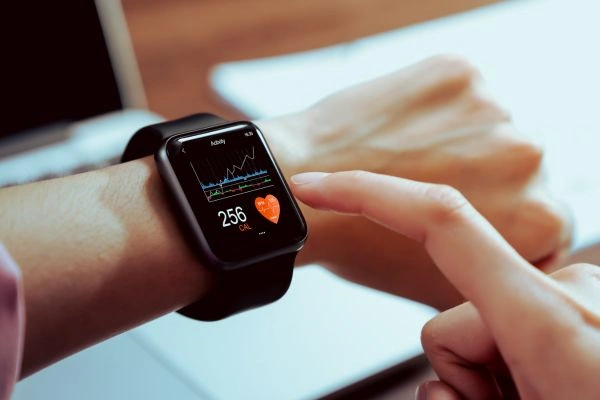
These insights can include:
- Predictive alerts for irregular heart rhythm or other anomalies.
- Personalized wellness plans tailored to lifestyle and biometric history.
- Stress and mental well‑being monitoring to suggest breaks or activity when needed.
Wearable sensors are also becoming more sophisticated, with some patches, smart clothing, and rings measuring biomarkers through sweat, temperature changes, and other non‑invasive methods.
Trend 4: Integration With Everyday Life And IoT
AI wearables are increasingly integrated with broader ecosystems, including smartphones, home automation systems, and workplace tools. This creates tailored experiences across environments. For instance, wearables could:
- Adjust home lighting or temperature based on stress or sleep signals.
- Sync with smart home security when a user enters or leaves a space.
- Work with enterprise systems to monitor worker fatigue or safety.
This expands wearables from personal gadgets to integral parts of connected, responsive living spaces and professional workflows.
Trend 5: Screenless And Ambient Interaction
Screenless or minimal‑display wearables are gaining attention. Products like the Luna Band rely on voice control and haptic feedback instead of traditional screens, reducing visual distractions and conserving battery life. Ambient interactions mean wearables support users quietly and continuously without requiring frequent glances at a display.
This matches broader user demand for less intrusive technology that fits into daily life without adding cognitive load.
Trend 6: Fashion‑Integrated And Lifestyle Wearables
Wearables are becoming design objects as much as tech tools. CES and industry showcases highlighted fashion‑integrated accessories that look like jewelry, smart clothing, or stylish bands. This change helps wearables appeal to more people by matching personal style rather than sticking out like obvious gadgets.
Brand examples include smart jewelry and minimalist smart rings that work as accessories while delivering advanced functions.
Trend 7: On‑Device AI Processing And Battery Advances
One major challenge for AI wearables has been battery life and reliance on cloud processing. New innovations focus on shifting AI computation onto the device itself using dedicated chips, which improves responsiveness, privacy, and offline capabilities. Emerging battery technologies, including solid‑state and enhanced lithium chemistries, promise longer use and fewer charges, transforming the practicality of AI wearables.

These improvements are key to moving wearables from short‑term novelty to long‑term everyday tools.
Recommended AI Wearables And Brands
Here are a few standout products and brands that represent the trends shaping the wearable landscape now:
AI Smart Rings
- Oura Ring (latest models) – Known for deep insights into sleep, recovery, and readiness.
- aaboRing Health & Fitness Smart Ring – Tracks essential health metrics and provides actionable insights.
- Samsung Galaxy Loop Ring – Combines health tracking with payment and identity features.
Smart Glasses
- Ray‑Ban Meta Display – AI glasses with built‑in display and contextual assistance.
- MemoMind AI Glasses – Designed to look like everyday eyewear while delivering useful AI functions.
Earbuds And Audio Wearables
- New smart earbuds with real‑time translation and AI personal assistant features are rumored from companies like OpenAI and others, signaling a potential shift in how voice‑powered AI lives on the body.
Lifestyle And Fashion Wearables
- Smart jewelry and minimalist bands from emerging brands blend health tracking with everyday style.
How AI Wearables Compare To Traditional Trackers
| Feature | Traditional Wearables | AI Wearables |
|---|---|---|
| Data Tracking | Basic metrics (steps, heart rate) | Predictive health insights, context‑aware assistance |
| Interaction | Screen or app based | Voice, ambient notifications, minimal screens |
| Personalization | Limited | Tailored insights and adaptive recommendations |
| Integration | Smartphone dependent | IoT and ecosystem connectivity |
| User Experience | Reactive | Proactive support based on patterns |
AI wearables are expanding the role of wearable tech beyond simple measurement to interpretation, guidance, and prediction.
Potential Challenges And Concerns
While AI wearables offer exciting benefits, some issues are raising questions:
Privacy And Data Security
Continuous data streams raise concerns about how biometric data is stored and used. Brands that emphasize on‑device AI processing can help keep sensitive information local rather than in the cloud.
E‑Waste And Sustainability
As wearable sales grow, so does electronic waste. Short device lifecycles and complex hardware can complicate recycling efforts. Some brands now offer recycling programs, but broader solutions are needed to address environmental impacts.
Health Anxiety And Over‑Monitoring
Constant biometric tracking can sometimes lead to unnecessary stress or health anxiety, especially when users misinterpret normal fluctuations as problems. Experts suggest striking a balance between insight and overwhelm.
Frequently Asked Questions
What makes AI wearables different from regular fitness trackers?
AI wearables go beyond tracking metrics. They interpret patterns, predict potential issues, offer personalized plans, and integrate with ecosystems to act proactively rather than passively.
Are smart rings better than smartwatches?
It depends on user needs. Smart rings are discreet and great for continuous health tracking. Smartwatches offer richer interaction and larger screens. A combination often works well for comprehensive monitoring.
Will smart glasses replace smartphones?
Not entirely. Smart glasses complement smartphones by offering contextual assistance and heads‑up info. Full replacement may take years as battery, comfort, and AR technology continue improving.
Are AI wearables safe for health monitoring?
Most are designed for general wellness and guidance. Clinical‑grade monitoring still depends on medical devices, but many wearables now come close to providing daily health insights.
How long will AI wearables last before charging?
Battery life varies by device. Smart rings and minimalist wearables often last days to weeks, while smart glasses and AR wearables typically need daily or multi‑day charging.
AI Wearables Are Shaping The Future Of Everyday Life
The wearable tech landscape is undergoing a major transformation as AI becomes central to device function and user value. Smart rings, smart glasses, earbuds with AI, and other innovative form factors show that wearable technology is no longer just about data capture. It is about interpretation, prediction, and seamless integration into daily life.
From personalized wellness plans to ambient, context‑aware support, AI wearables are shaping up to be essential tools for health, communication, productivity, and beyond. As technology continues to evolve and devices become smarter and more intuitive, the potential for wearables to enhance everyday life grows stronger by the day.